
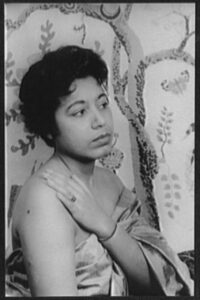
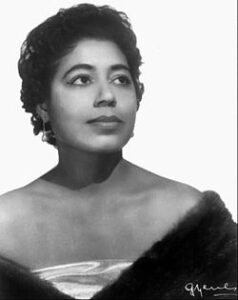
Mattiwilda Dobbs
Mattiwilda Dobbs Janzon was born on July 11, 1926 and named for her maternal grandmother, Mattie Wilda Sykes. She was the fifth of six daughters born to Irene Ophelia Thompson and John Wesley Dobbs, who were leaders in the African American community of Atlanta’s Auburn Avenue area. In a family where every member sang, “Geekie,” as Ms. Dobbs was affectionately called, was soon recognized as having a soprano voice that was special. “I would never have been a singer if it were not for my father,” said Ms. Dobbs. “I was too shy. He supported me and always encouraged me to go on.”
She was a pioneering coloratura soprano and one of the early African American singers who sang at the Metropolitan Opera in New York, La Scala in Italy, and other international opera houses during the 1950’s and 1960’s. Mrs. Dobbs coloratura soprano voice was praised for its freshness and agility, glowing texture and tonal beauty. She was 90 when she died.
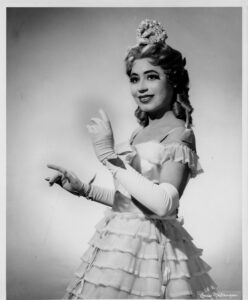
Ms. Dobbs grew up in a musical household, where singing was a constant. She started piano lessons at seven like all of her sisters and sang in the church choir as a teenager. She began formal voice training at Spelman College in Atlanta and also sang in the glee club. A music and Spanish major, she was valedictorian of her class. Upon graduation in 1946, Ms. Dobbs traveled to New York City with the support of her parents for voice study with German soprano Lotte Leonard. While in New York, she earned a Masters in Spanish at Columbia University Teachers College, and was granted a Marian Anderson award as well as a scholarship to the Mannes Music School and to the Opera Workshop at the Berkshire Music Center at Tanglewood. In 1950, Ms. Dobbs won a John Hay Whitney Fellowship and used the grant to study French repertoire in Paris with Pierre Bernac. The following year, she won the International Music Competition sponsored by Geneva’s Conservatory of Music. Her international career blossomed with her debut at the Netherlands Opera in Amsterdam. After a successful European concert tour of several major cities, Ms. Dobbs made her debut in 1953 in a Rossini opera at La Scala in Milan, the first black principal singer. She also made her debut the same year at the Royal Opera House in London, as the Woodbird in “Siegfried.” She later appeared at the Paris Opera, the Vienna State Opera, and at the opera houses of Hamburg and Stockholm. She sang a command performance before Queen Elizabeth, Prince Charles, and visiting King Gustave and Queen Louise of Sweden at the Royal Opera House, Covent Garden in 1954.
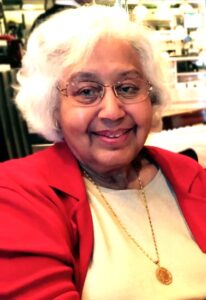
Although she remained close to her family and performed in Atlanta several times, personal as well as professional considerations prevented Dobbs from making the city her home. She lived in Spain with her first husband, Luis Rodriguez, who died of a liver ailment in June 1954, fourteen months after their wedding. She then married Bengt Janzon, a Swedish newspaperman, just before Christmas 1957. Her family attended the wedding, but because of the stir an interracial marriage would have caused in the segregated South, the ceremony was held in New York, and the new couple made their home in Sweden. Bengt Janzon did not visit Atlanta until 1967. (He died in 1997).
Following the example set by African American performer and activist Paul Robeson, Dobbs refused to perform for segregated audiences. In Atlanta she could have performed in African American churches or colleges, but she was not able to perform for a large integrated audience until the Atlanta Municipal Auditorium was desegregated in 1962, when she was joined onstage and given a key to the city by Mayor Ivan Allen Jr. It was the first of many performances in her home city. Before the organization of the Atlanta Opera in 1985, Dobbs performed in operas produced and directed by the acclaimed opera singer Blanche Thebom, and in 1974 she sang at the gala marking the inauguration of her nephew Maynard Jackson as mayor of Atlanta.
In 1974, after retiring from the stage, Dobbs began a teaching career at the University of Texas, where she was the first African American artist on the faculty. She spent the 1974-75 school year as artist-in-residence at Spelman College, giving recitals and teaching master classes. In 1979 Spelman awarded honorary doctorates to both Dobbs and Marian Anderson.
Dobbs continued her teaching career as professor of voice at Howard University, in Washington, D.C. She served on the board of the Metropolitan Opera and on the National Endowment of the Arts Solo Recital Panel. Dobbs continued to give recitals until as late as 1990. She died on December 8, 2015, at her home in Atlanta.
Ms. Dobbs received the Opera Music Theater International Lifetime Achievement Award for her illustrious career in the history of opera. She was committed to a new generation of OMTI Emerging Artists, as adjudicator of OMTI International Vocal Competition, and International Singers Forum. She also served on the board of the Metropolitan Opera and on the National Endowment of the Arts Solo Recital Panel.
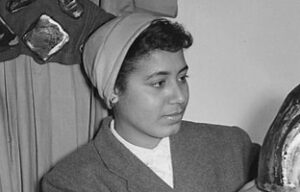
Mattiwilda Dobbs (July 11, 1925 – December 8, 2015)
- First and foremost, at the top
- Secondly, another item
- Thirdly, a concise point
- Fourth, a bit more description
Other Negro Legacies in European Classical Music
Marion Anderson (February 27, 1897- April 8, 1993), Leontyne Price (February 10, 1927-), Jessye Norman (September 15, 1945-September 30, 2019, Kathleen Battle (August 13, 1948).
When we got an opportunity to honor Mattiwilda Dobbs I leapt at the chance and rejoiced in my heart. It gives me a chance to talk about three of my favorite things in the world, the Southern Black Church, the Atlanta Black Bourgeois Aristocracy, and European Classical Music. Marion Anderson, Leontyne Price, Kathleen Battle, and Jessye Norman are far more familiar to us than Mattiwilda Dobbs, and yet Dobbs name deserves to be right alongside that pantheon of names, and honored just as much as they. Here in Mattiwilda’s hometown, we are especially derelict of duty, for as Jesus noted, ‘a prophet is often without honor in his (or her) hometown’.
This is all the more the case because African Americans practice a unique form of cultural amnesia. To the point that, Blues and Jazz, once considered popular working-class music in Black culture, are now securely in the domain of the upper middle classes and White mainstream academia along with European Classical Music. Jazz and Blues got bourgeois or bourgey with the negative connotation. Most poor and working-class African Americans have absolutely no time for Blues, Jazz, or Classical, no matter how many Black people are doing it, or that its Black practitioners were among the greatest of all time irrespective of race. Certainly in Black Atlanta, most of us of any socioeconomic level are completely unaware of Mattiwilda Dobbs accomplishments, or the fact that she is from our backyard!
Just like the singers Monica, Jennifer Hudson, and Fantasia, Mattiwilda Dobbs, Leontyne Price, Kathleen Battle, and Marion Anderson got their starts singing in the segregated Black church. It is also to be noted these Black women of Opera got their starts in strong Black families that were the pillars of their churches. Our segregation era networks of Black churches supported these women at every phase of their careers, often helping supplement the fees and other costs associated with the advanced study of music. Dobbs, Price, Battle, Anderson, and many other Black operatic singers would travel the circuit of Black churches and Negro Civic Organizations, doing recitals based on Negro spirituals. After the recital the collection plate was passed. This is what we had to do before integration. It was difficult to get distracted from this mission because we couldn’t go to White folks’ malls on Sunday afternoons for leisure and entertainment. We went to various church house recitals and programs, and there are very strong reasons for Negritude reaffirming this process at the church and community level. Perhaps our children would not have so much free time on their hands that they can waste it on ‘take overs’.
Before we got used to paying pastors astronomical salaries to maintain lifestyles that would shame a platinum toothed rapper, the Black church viewed its mission to be supporting Negro advancement, and supporting the higher education and training of its community youth, in whatever professional fields they demonstrated genuine talent. Our churches, and fraternities and sororities had to function in this ‘funding’ and ‘facilitating’ capacity because there was no integration, let alone DEI, Affirmative Action, etc.
Unfortunately, to the White mainstream and the present Black community, if a kid can’t run a mile a minute, or isn’t 7 ft. tall, they couldn’t care less. A Black kid with a high SAT score gets ignored by our community, while a kid that can’t read on grade level, but is meant to play ball at an elite university, is treated like a hero-savior for putting on a hat with a White mainstream SEC University on it. All the major local Atlanta news stations are there, for this crime against that young man, but our black community barely pays attention when our children achieve something academically.
I’d also like to note that these great Black women of Opera not only had strong churches in their lives, but they had fathers that didn’t know ‘diddly squat’ about European Classical music and vocal tradition, but loved their baby girls, their princesses, and moved heaven and hell to make sure their baby girls had all the resources they needed to be the best they could be. These fathers took their working class wages (except in the case of Mattiwilda who daddy was rich and her mother good looking), and invested it in their Black daughters.
I only mention this because there is a version of Black feminism and womanism that suggests fathers are not only unnecessary, but necessarily problematic and pathological representations of an evil patriarchy. We shall save such matters for later, but of particular note is Jessye Norman’s father’s role in her life. An entire chapter of her autobiography is titled ‘A Father’s Pride’. A direct quote is worth noting because I think it is representative of all these Black women’s experiences that enabled them to reach the heights they did.
Norman recounts “My father was president of the PTA for over twenty years (he was still in this position at our elementary school when the youngest of my siblings was entering college). He drove us to school every morning not because it was too great a distance for us to walk, but because it gave him a moment to visit with us. He would check to see if we had finished our homework and find out what afterschool activities we might have planned. In addition to being an excellent provider and a God-fearing, curious man, he was attentive – something I could notice easily by the way my father did something as simple as help my mother descend steps. He was always there with his hand at her elbow, a kind gesture that I noticed even as a very young child. He opened car doors and made sure she was settled in the seat next to his – the driver’s seat – long before seat belts became the requirement of the day.
Glory to God Saints! How is it we were capable of this kind of Black love without YouTube influencers, psychologists, therapists, pills, and other bad habits. Jessye Norman is from Augusta, GA, which of course with Paine College has a long history in Black southern bourgeois life and culture. While we ‘ATL-iens’ make a choice to exalt ATL as the ‘strip club capital of the Negro world’, or a former hip-hop-R&B capital, if we have jettisoned 100 years of Negro musical and cultural history to be that, of what possible good is it. I do not mind us being the strip club capital of Black America, if as a so-called Black mecca should be, we are also the cultural capital of African American Civilization in the Western Hemisphere!
Of course, Mattiwilda’s legacy revolves around far more than being of the first Negro women to perform certain places that hitherto did not allow Negroes. As notable as that is, her journey represents a common one for Jim Crow era Black Opera and classical music singers and performers. The truth is that no matter what you knew, or what gifts and talents you had, due to segregation, you would not be allowed to study or perform as a Black person. In such dire straits, performers such as Anderson, Price, Dobbs, and Norman had to travel to Europe to be educated in vocal performance and technique. After passing that hurdle with exemplary skills, these Negro women were then successfully employed by the finest opera houses in Europe. Only then, after European acceptance, did White mainstream American Opera houses and schools begin employing Negro talent.
The problem for Mattiwilda was that like Marian Anderson, when opportunities in America really opened up, both were a little too old, that is to say, out of their prime, to really take advantage of the new opportunities. Other younger singers like Leontyne Price, Jessye Norman, et. al. had to fully walked through the doors opened by singers like Marion Anderson and Mattiwilda Dobbs. That is another reason Mattiwilda’s name and background in Atlanta aren’t better known, locally, nationally, or internationally. This is a great disservice, as she certainly deserves our love as Atlantans, if not the love and admiration of the world beyond Atlanta.
Let us not suffice with platitudes either, to justify the fact of how accomplished she was, and deserves every musical accolade we give her. We begin with her glorious instrument, the voice. It was magnificent, rich and sonorous, yet fluidly capable across the Bel Canto Italian tradition. In this regard she certainly equaled, if not excelled in some regards Martina Arroyo and Kathleen Battle in the Italian repertoire.
Mastering Italian opera and the Bel Canto tradition is one thing, and many an operatic career has been made just off the Italian music tradition. But perhaps due to the influence of German singer/voice teacher Lotte Lehmann, Mattiwilda developed extreme facility in the German Lieder tradition of singing. The most famous of which are songs by Schubert, Beethoven, Richard Strauss, Mahler, and Wolf. This requires the study and mastery of diction, pronounciation, tone, and emotion in the vocal product of the singer. As any opera singer or fan will tell you, studying German, Italian, and French repertoire is no easy feat and the sign of years of dedication, competency, and professionalism.
I will save the reader a list of the names of current so-called hip-hop and R&B musical genius celebrities, for fear of accidentally rubbing another wrong person the wrong way, with absolutely no means to defend myself except prayer. However it might be fascinating to wonder what Mattiwilda would think of Kanye’s statement that he was greatest musician of all time. Ladies and gentlemen, that is one of the reasons it pays to have high musical tastes. It keeps you from ever being fooled by what is commercially considered ‘genius art’, and you make it far more likely that you will actually recognize genius when you do see it. Furthermore the higher your tastes, the less your need to have others tell you what ‘good art’ is, whether they are commercially motivated or not. Was Kanye the greatest musical artist of all time? It says a lot about post-modern Black culture that people took such a statement seriously enough to report it as news, and not the ravings of a lunatick (Olde English 800 spelling).
Mattiwilda’s recordings were limited by when she came of age. Not only were there limits imposed by segregation to what she could do, there were technological and other recording limitations as well. By the time these limits were lifted, her instrument wasn’t what it was in her prime, and thus there was less motive to do a lot of recording. Nevertheless, there are many examples of her talents and gifts on YouTube, that bear witness to her greatness. Her place in the hearts of Black Bourgeois Atlanta should never go undocumented. Her commitment to music education at Howard, Spelman and other HBCUS is a lesson and example to us, to fully fund and encourage traditional music education in Atlanta Public and Fulton County school systems and other significantly Black public-school districts in metro Atlanta. And to reinvigorate our churches with a devotion to the welfare of its children, rather than judging its success on the lifestyle of its pastors.
Black Mecca is certainly responsible for no less than that.
G Lucas